






Comec Innovative, a company based in Chieti (Italy) with over 60 years of experience in the design and manufacture of special machinery and production lines for composite materials, continues to drive innovation in high-tech sectors such as aerospace, aviation, and automotive.
Within this framework, the Fiber Care project—funded by the Abruzzo Regional Program FESR 2021–2027—has successfully achieved all its objectives: the development and validation of a prototype production line for recycled carbon fiber–based prepreg materials, reaching a Technology Readiness Level (TRL) of 8. The initiative aims to generate a new class of sustainable materials for automotive and aeronautical applications, combining cost reduction, lower environmental impact, and mechanical performance comparable to conventional prepregs.
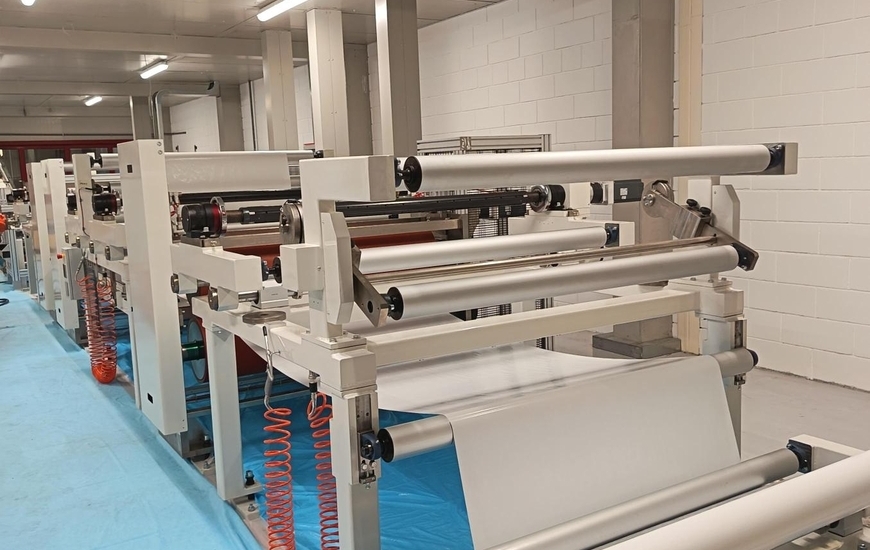
The 24-month project included raw material selection, state-of-the-art analysis, and the definition of the most suitable characterization techniques to assess both impregnation process efficiency and composite mechanical behavior. Based on these analyses, Comec Innovative developed and implemented a prototype machine optimized for processing recycled mats and short fibers. The line was designed, built, and successfully validated, enabling the production of prepregs in various morphological forms and verifying their processability and impregnation uniformity.
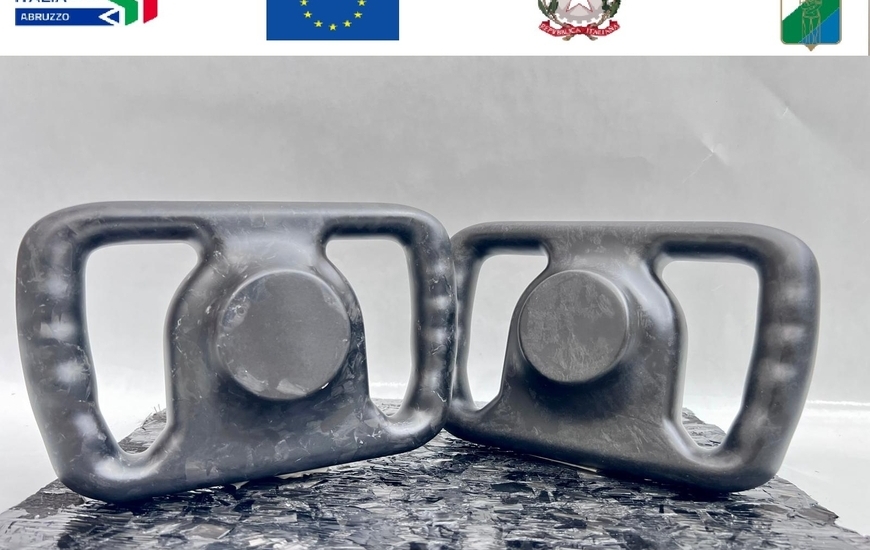
The resulting materials were experimentally characterized to evaluate their physical and mechanical properties and to qualify the impregnation process. The collected data enabled the creation of a material card used for numerical simulation of components through FEM modeling. As application validation, two automotive component demonstrators were manufactured exclusively using the developed prepregs: production showed good processability, and FEM analyses confirmed compliance with the required structural specifications.
Fiber Care was carried out in accordance with the DNSH (Do No Significant Harm) principle and aligns with the transition toward a circular economy. The use of recycled fibers reduces the carbon footprint compared to virgin materials, generates no significant emissions or pollutants, and operates in industrial environments without interference with natural habitats. The achieved results now pave the way toward industrial-scale production and the large-scale adoption of recycled carbon fiber prepregs.
-

-
20 January 2026