




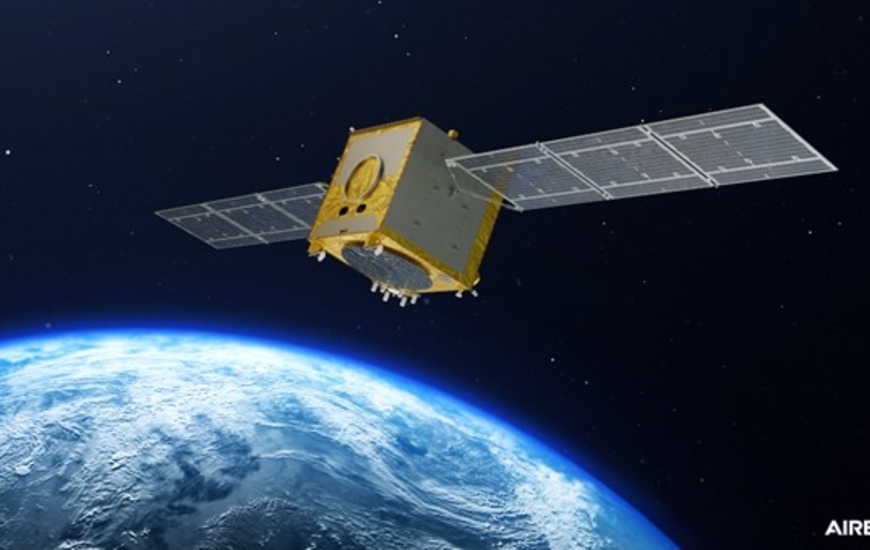


The European Space Agency (ESA) has awarded Airbus a contract to build two additional second-generation Galileo satellites, expanding the company’s role in Europe’s satellite navigation programme. The new order adds to six G2 spacecraft already under contract.
The award was made by ESA on behalf of the EU Agency for the Space Programme (EUSPA), under delegation from the European Commission, and will build on the manufacturing capabilities already established for the next generation of the Galileo constellation.
The G2 satellites will feature enhanced navigation antennas designed to improve the accuracy of Europe’s GNSS system, together with fully digital payloads that can be reconfigured in orbit, allowing the spacecraft to respond to changing user requirements and introduce new signals and services.
Each satellite will also incorporate an enhanced atomic clock configuration and inter-satellite links enabling spacecraft to communicate and cross-check data. Advanced anti-jamming and anti-spoofing capabilities will further protect the integrity of Galileo signals.
Each spacecraft will weigh more than two tonnes and is designed for an operational lifetime of 15 years in orbit.
Airbus will use a coordinated European production programme involving sites in Backnang, Friedrichshafen, Getafe, Ottobrunn and Toulouse, combining manufacturing, integration and testing expertise across the network.
According to ESA, the additional spacecraft will help safeguard the continuity of Europe’s satellite navigation services while strengthening strategic autonomy. Airbus also highlights the importance of the new generation in improving navigation capabilities for European security and defence.
Galileo is a flagship European Union programme funded by the EU and managed by the European Commission. ESA leads the design, development and qualification of the space and ground systems, while EUSPA is responsible for service provision and operational deployment.
-

-
28 October 2026