




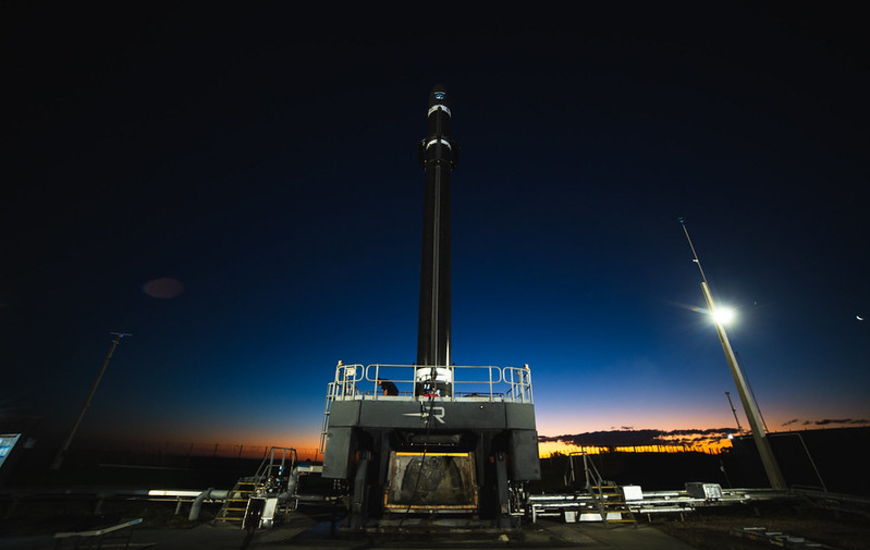


Rocket Lab is preparing for Electron’s 100th launch, marking a major milestone for a small orbital launch vehicle whose carbon-composite structure has been one of its defining engineering features. The mission, called “The Mountain God Rises”, is scheduled no earlier than November 14, 2026, from Launch Complex 1 in Mahia, New Zealand.
According to Rocket Lab, Electron is set to become the first commercial small-lift launch vehicle to reach 100 launches, less than a decade after its debut. The company also identifies Electron as the first carbon-composite orbital launch vehicle, using lightweight structural materials to improve overall vehicle efficiency.
The 100th mission will deploy a QPS-SAR Earth-observation radar satellite for Japanese company iQPS into a low Earth orbit of around 575 kilometres.
Electron also uses Rutherford engines, manufactured using additive technologies and powered by electric pumps, combining two advanced manufacturing approaches - composites and 3D printing - within a launch platform that has steadily increased its flight cadence.
Reaching 100 flights is significant from a materials perspective as well. Primary carbon-fibre structures used in launch vehicles must combine low mass, stiffness, production repeatability and reliability under the extreme loads generated during ascent.
Since its first flight in 2017, Electron has become one of the most frequently launched commercial rockets for small-satellite access to orbit. The milestone therefore provides further evidence that primary carbon-composite structures can support not only experimental or low-rate programmes, but also launch systems operating at meaningful production and flight cadence.
-

-
13 November 2026