





FAIRMAT is targeting the construction industry with recycled carbon-fibre composite materials for applications including fastening systems, rails, panels, façades and furniture components. The aim is to combine performance, cost and lower environmental impact without requiring major changes to existing manufacturing lines.
The company’s technology uses robotics and artificial intelligence to recover high-value composite waste, mainly from the aerospace and wind-energy sectors, while preserving as much of its original mechanical performance as possible. FAIRMAT says it has around 3,000 tonnes of contracted feedstock and three recycling and production sites in France, the United States and China.
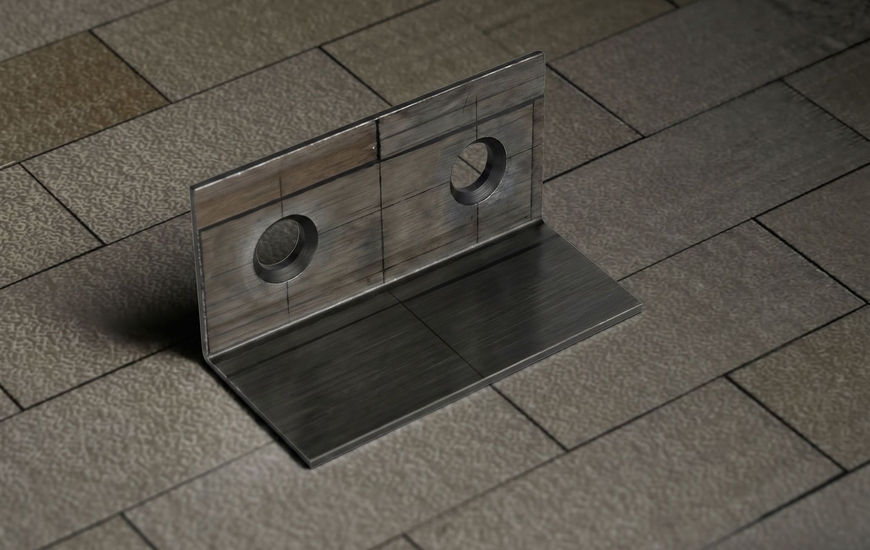
One of the first target areas includes brackets, rails, angle bars and connectors. According to the company, recycled-carbon components can be up to 82% lighter than zinc-coated steel at equivalent geometry, while generating 97% lower CO₂ emissions than standard steel and 23% lower emissions than low-carbon steel.
The material also offers advantages in humid, coastal and alpine environments because carbon-fibre composites do not rust. Their thermal conductivity is around five times lower than steel, helping reduce thermal bridging in insulated façades.
FAIRMAT also supplies the material in large board formats for panels, façades and furniture, as an alternative or complement to conventional structural cores. The materials can contain up to 95% recycled content and, along the fibre direction, deliver a stated bending modulus of 120 GPa at a density of 1.6 g/cm³.
Industrial integration is another key part of the strategy. Materials can be supplied as finished or semi-finished parts, plies or boards and incorporated into existing moulding, lamination and CNC-machining processes, including hybrid lay-ups with conventional materials. According to FAIRMAT, this can be achieved without additional capital investment in production equipment.
The company is already working with construction-sector players including ETEX to explore solutions combining performance, scalability and lower environmental impact.
-

-
20 November 2026