




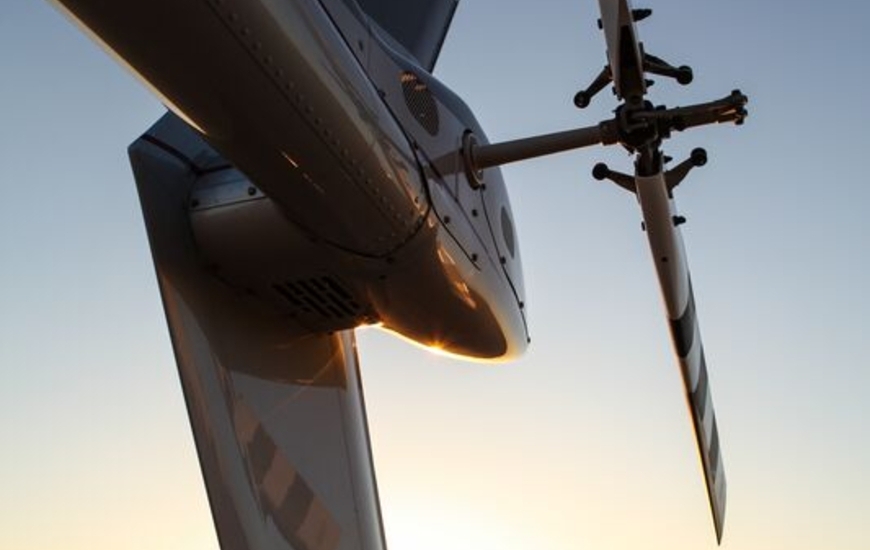
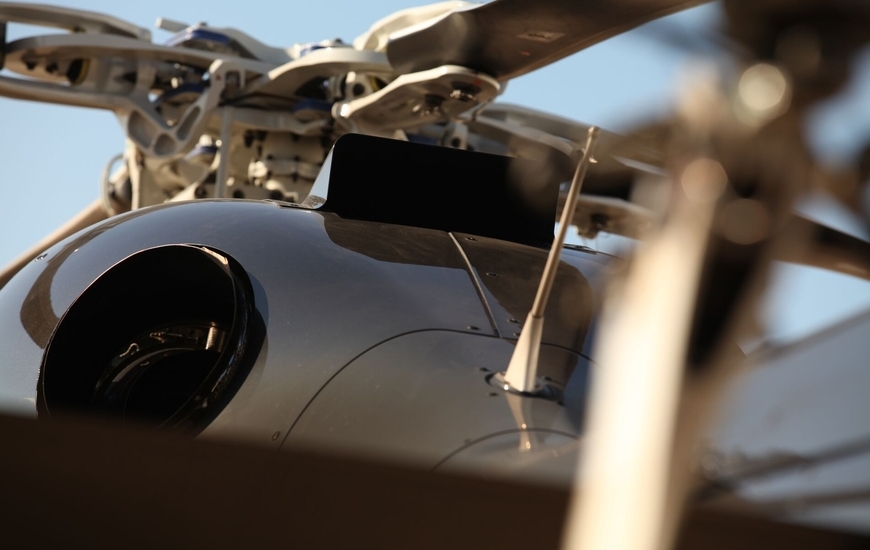


From the wooden blades of early helicopters to today’s advanced composite structures, Bell has traced the evolution of its rotor technology, showing how materials have progressively transformed blade performance, durability and design. The feature was published on November 5 as part of Aviation History Month.
The first Bell Model 30, developed in the 1940s, used blades made from laminated wood with a metal spar along the leading edge. The solution provided the strength, weight and aerodynamic shape required during the early development of Bell’s helicopter technology.
In the 1950s Bell began moving towards metal blades. In 1957, the H-13J helicopters used to transport US President Dwight D. Eisenhower were equipped with all-metal rotor blades, also increasing the aircraft’s useful load.
The shift towards composites accelerated in the 1970s. In 1972 Bell engineers developed an all-composite main rotor blade for the Model 214, designed to fit the existing rotor without hub modifications. Flight tests recorded lower loads than with the metal blade, while further testing demonstrated improved fatigue strength.
Composite construction also gave engineers greater control over the blade’s aerodynamic and structural characteristics, allowing vibration behaviour and dynamic performance to be refined through the blade architecture itself.
A current example is the Bell 407GXi, whose main rotor blades are built primarily from fiberglass composites reinforced with internal honeycomb cores. This construction combines strength, flexibility and durability while keeping weight low, with metal leading edges protecting high-wear areas.
Rotor blades are now one of the key areas of expertise at Bell’s Advanced Composite Center in Fort Worth, Texas, where advanced materials and manufacturing capabilities are used to produce components for successive generations of rotorcraft.
Bell’s history therefore shows that the move from wood and metal to composite materials has involved much more than weight reduction, opening new opportunities for integrated blade design while improving fatigue resistance, dynamic behaviour and operational durability.
-

-
10 November 2026