




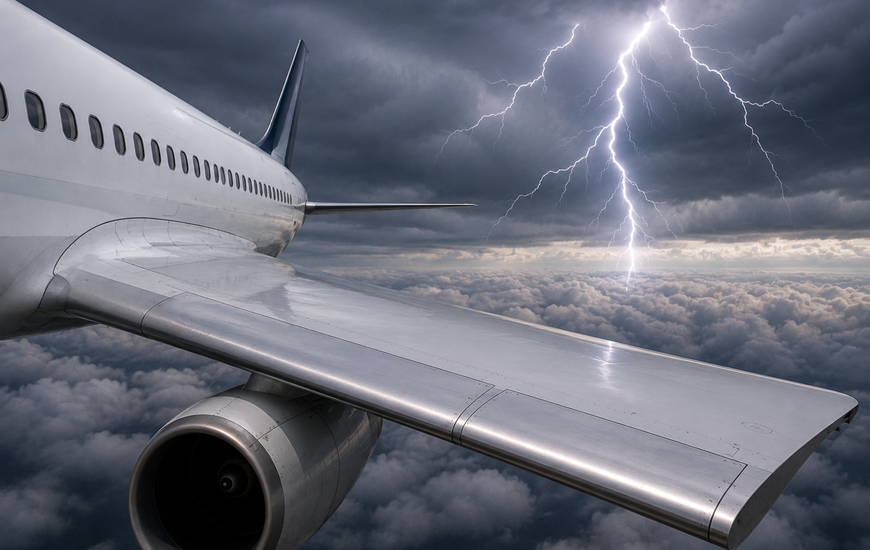


Integrating a metallic element directly into carbon fibre fabric could make composite aircraft structures more resistant to lightning damage. Researchers at the University of Wisconsin–Madison have developed a new hybrid material designed to combine the structural properties of composites with improved electrical conductivity.
Carbon fibre composites are increasingly used in aircraft structures because of their high specific strength and lightweight properties, but they do not conduct electricity as efficiently as traditional metallic skins. During a lightning strike, electrical energy can therefore become concentrated in limited areas, potentially causing overheating and material damage.
The Wisconsin team's solution incorporates a metallic “yarn” directly into the carbon fibre fabric. The resulting conductive path follows the surface of the structure, helping distribute the electrical current generated by a lightning strike more effectively.
Laboratory tests showed a significant reduction in damage. In one simulated lightning test, the new composite recorded a mass loss of just 0.03%, compared with values of up to 3% for the composite without the hybrid protection. Flexural tests were also carried out to assess structural integrity after the simulated strike.
The technology could potentially be incorporated directly into composite structures during manufacturing or applied as a protective surface layer to existing aircraft and repair areas. The researchers now plan to investigate long-term durability, galvanic corrosion and the use of alternative metals, including copper.
-

-
03 September 2026