




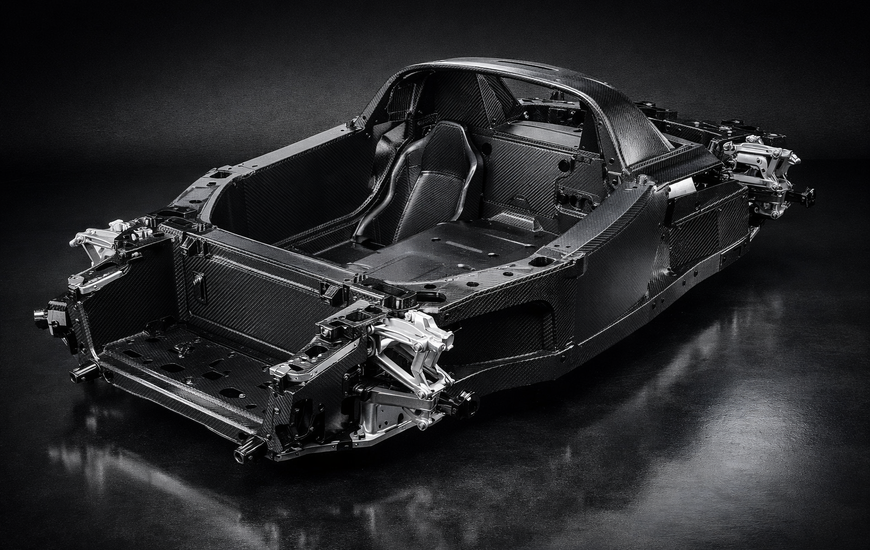


The evolution of electric hypercars is driving the development of a new generation of structural architectures based on carbon-fiber monocoques.
This type of structure, already widely used in motorsport and in the most exclusive supercars, is becoming increasingly central to the design of high-performance battery-powered vehicles.
A monocoque - often referred to as a carbon tub - is a load-bearing structure made from carbon-fiber reinforced composite materials. Unlike traditional steel or aluminum chassis, this solution integrates the passenger cell and a large part of the vehicle’s primary structure into a single element, providing extremely high torsional stiffness and significant weight reduction.
In electric hypercars, the monocoque plays an even more strategic role. Battery packs are among the heaviest components of the vehicle and require a structure capable of integrating protection systems while managing energy absorption and dynamic loads during acceleration, braking and cornering.
Thanks to the properties of carbon fiber - light weight, high strength and exceptional stiffness - composite monocoques help compensate for the additional mass introduced by electrified powertrains while improving safety and dynamic performance.
At the same time, the composites industry is developing new manufacturing technologies aimed at making these structures more efficient from an industrial perspective. Alongside traditional autoclave processes, typically used in motorsport and low-volume supercar production, new press-based technologies using prepreg or SMC materials are emerging, enabling faster production cycles and higher repeatability.
This evolution reflects a broader transformation within the composites sector. Companies specialized in the development of carbon-fiber components are investing in technologies capable of combining structural performance with industrial scalability.
The integration of structural design, FEM simulations and advanced manufacturing processes is becoming one of the key factors enabling the wider adoption of composite monocoques in next-generation vehicle platforms.
With the rise of electric hypercars, carbon fiber is no longer just a symbol of technological exclusivity. It is increasingly becoming one of the fundamental building blocks of future automotive engineering, where lightweight structures, safety and structural integration will define the performance of the world’s most advanced vehicles.
The editorial staff
-

-
17 March 2026